Understanding How Bank logs spamming latest tutorial Works in 2026
Spamming for bank logs is a hard but rewarding job. If you know how to correctly get logs on a large scale, you can sell them and use them for black-hat purposes. In this essay, I’ll show you the right way to spam for bank logs.
How to Spam for Bank Logs in 2026?
To spam for bank logs, you will need to have made a phishing website to trick visitors into thinking it is legitimate and then submitting their details under that fallacy. You need to collect the bank logs from the backend of the phishing website and then run a background check and then log in to their bank accounts based on the data you have retrieved. These steps must all be completed quite swiftly, as you don’t want them to find out while you are active inside of the account. Bank logs spamming latest tutorial.
Always enable your VPN when phishing and retrieving data, as your digital footprint could be tracked if you aren’t utilising proper security measures.
Let me give you a quick checklist to complete the spamming operation.
Table of Contents
- What is bank log phishing/spamming?
- Necessities for Spamming for Bank Logs
- Using VPN while Phishing for Security Purposes
- SMTP (Simple Mail Transfer Protocol)
- SUTS (Spamming Using Text Scripts)
- Creating Email List
- Hosting 1:1 Cloned Pages
- Spamming for Bank Logs
- Build a compelling phishing page.
- Purchase Secure Web Hosting for Phishing Pages
- Execute Spamming Operation
- Using Your Bait to Effectively Phish Targets
- Sustaining Phishing Operational Perpetuity
We use email & SMS as the medium of choice to send fake pages (phished pages) to targets in order for them to think they are logging into their real bank account when clicking the messages. The data will consist of all the typical things that users enter when logging into their bank accounts, like their bank account username, bank account password, and email used for login. The data that we aggregate from these users are inherently “bank logs”, as after the
bank log phishing page has captured all of this data; their accounts can be accessed remotely for malicious purposes.
The phishing website is a 1:1 clone of the real banking login portals used by real banks. The code is simply swapped and used on a fake page made by you with a similar domain name so the user would never suspect that its fake. Bank logs spamming latest tutorial.
Necessities for Spamming for Bank Logs
You will need a set of tools to begin spamming, and in this article we will be going through all of them.
Using VPN while Phishing for Security Purposes

VPNs, or “Virtual Private Networks”, will mask your activities relative to all your activities involving the spamming operation from top to bottom. Your real IP address will not be attached to any of the hacking operation, and it will be impossible for any law enforcement to link it back to you. I recommend that you have a VPN active at all times when both setting up and executing spamming operations. If you are interested in learning more about cashapp carding, we have a section on the website.
SMTP (Simple Mail Transfer Protocol)
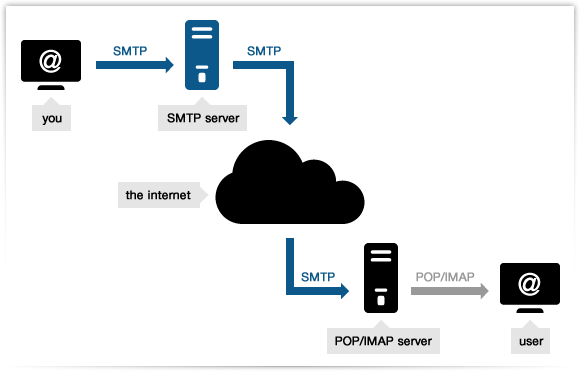
Did you know that when a specific email account sends out too many emails that get reported the account @ gets flagged by internal email provider systems, that the account gets blacklisted/banned? When you are spamming for logs you are emailing thousands of prospective targets waiting for them to get converted.
A lot of them could potentially report your email address. Having SMTP will help mitigate this error happening and blocking your email addresses from getting into their main inbox. Without having SMTP in your strategy you will never be able to scale your operations, so keep that inside of your toolbox. Bank logs spamming latest tutorial
SUTS (Spamming Using Text Scripts)
You need a message that is included in the email or text message sent to the prospective targets. Without a spamming text script, you will not be able to convince them that the message is real. The text scripts typically consist of trying to sound like whatever the real banks would say.
The scripts need to have some sense of “utility” meaning when the user sees the email script, it feels as if they need to make some sort of update or micro-optimisation to their bank account in the next coming days; otherwise, their account will be under some particular distress. An
example of such can be a script like “Your Bank Account as Suspicious Transactions… Please
Login to Resolve”; scripts like these promote the aspect of urgency and lifts your conversion levels.
Creating Email List
The next thing you need in your toolbox is a list of emails to spam. These emails can’t be spawned arbitrarily; the emails have to be high-quality and real. Luckily there’s an oasis of websites that sell and distribute real users’ email addresses. There are plenty of other routes to find active email addresses, such as hiring hackers to hack companies’ databases and extract
emails from there. I suggest that you do your research on how you would like to collect emails.
Don’t use email generators or other forms of getting emails in a fake way; your phishing messages will never ever convert, and it will be intrinsically worthless.
Another way to grow your email list is by running Facebook campaigns that encourage users to sign up for offers; you can then use the emails collected from these campaigns to conduct your spamming operation.
Hosting 1:1 Cloned Pages
As mentioned before, a “cloned page” is simply a lookalike webpage of the login portals that real banks use for users when they log in.
The users will be entering their login data on these cloned pages, which will then get funnelled to you. The goal of the webpage is to serve as your singular and primary phishing site after their emails are spammed.
There will be a rate in which these users actually click through on the email after you send it to them. We call that the “click-through rate”; if they don’t click on your email with the cloned page, they didn’t click through, and that will go against the overall rate, and vice versa if they actually click through. Bank logs spamming latest tutorial.
This rate is extremely important, and you will have an accurate rate of how much traffic your cloned page is receiving realistically versus how many spammed emails you have sent out. This rate will be traced through the mediums of communication of both email and SMS messages.

Spamming for Bank Logs
This next session of the article will overview the step-by-step of conducting the spamming operation from an operational level and will be actionable by simply following the next steps that I’m going to explain.
Where to Buy Bank Logs
In the past, I used to spam all my bank logs, but now I get them from dumpseller.com in the forum. You can buy from him here
1. Build a compelling phishing page.
One of the most important things you should do before any of the creation phase of phishing pages is simply choose the exact bank branch you would like to target to make pages off of. Go with the bigger banks in the US, such as Chase, Wells Fargo, Capital One, etc. This is because if most Americans use one of these banks, the likelihood of them clicking through it is higher because there’s a higher chance they might just randomly click through on it.
The phishing clone page needs to be a 1:1 copy of the real bank’s login portals; luckily, there are pre-made templates where you can copy and paste the UI/UX and related code. Once you have acquired these templates from dark web markets, you need to start installing the code and user interfaces onto your domain.
The next important aspect of the phishing page that correlates with the aesthetics of the cloned page is the domain. Domains reinforce the legitimacy of the phishing page’s look. The phishing page needs to look like the real website; therefore, the domain needs to look close to the domain of the actual bank. For instance, “capitalone.com” is a real banking website.
A fake domain you could utilize would be something like “capitaIone.com”. If you can’t tell the difference, note that the only distinction is the capital “i” I used in place of the “L” in “Capital” on the real website. Bank logs spamming latest tutorial
While many of these domains are already taken, if you do enough work, you will be able to create website domains that look shockingly similar but maybe a little bit different. The differences can be rather large; users are stupider than you think.
2. Purchase Secure Web Hosting for Phishing Pages
You need to use a web hosting platform that will not ban your domain if they find out that you are purchasing domains for malicious use cases.
I would suggest any and all hosting platforms that have Bitcoin as their sole method of purchasing domains. These web hosting platforms tolerate blackout users more than the others.
3. Execute Spamming Operation
As stated before, the spamming emails need to be relatively familiar to the users you are sending these emails out to. This means that your script must closely resemble the real banks, your phishing page should have an attractive URL, and the SMTP configuration must be sufficient to prevent your emails from ending up in spam folders.
4. Using Your Bait to Effectively Phish Targets
Your click-through rates will not always be high. In fact, less than 30% of the people who receive your spamming emails will even open them. This is acceptable because if only 50% of the 30% of the people that opened your spamming email filled out their information, of a thousand people spammed.
That’s 300 people that opened your email, and if 150 people filled out their information, and the average value of a bank log on the black market is $200.00, then 150 x $200 is $30,000 in profit. This is assuming that you aren’t just using all of the logs for yourself… which would, of course, be even more profit if you cashed them out. Bank logs spamming latest tutorial.
5. Sustaining Phishing Operational Perpetuity
Redundancies could arise from lowering click-through rates or the host closing your domain. Therefore, staying one step ahead of these issues will determine whether your spamming operation remains effective for only a week or continues indefinitely.
To mitigate against redundancies, acquire a full-stack team to operate your operations smoothly without any issues falling through the cracks. Bank logs spamming latest tutorial.
Conclusion
Once you learn about spamming, you’ll quickly see that it’s one of the most profitable areas in the blackhat world once you get good at it. Hearing about it is one thing, but doing it is another.
I think you should practise till you start to notice good results. Once you start seeing results, quickly grow your business and hire others. You can easily sell the logs on the illicit market and become a money machine because you won’t even have to cash them out yourself.
Good luck on your trip.